
Latest Articles
These 21 original articles form the LuckyToKnow AI launch evidence library: a deliberately bounded first collection of controlled tests, synthetic datasets, public-source analyses, workflows, and safeguard frameworks. New work will follow at roughly two or three manually reviewed articles per week; nothing is published automatically.
-

A Reproducible Benchmark for Testing AI on Financial Questions
Thirty synthetic questions, a fixed rubric, and a scored result that rewards correct caution as well as arithmetic.
-

Agentic AI for Money and Business: What It Can Do and What Still Needs a Human
An 18-task capability and risk matrix that separates automatable preparation from consequential approval.
-

How to Verify an AI Update Before Changing a Money or Business Workflow
A ten-check release-verification method applied to the current OpenAI tool documentation, with a stop/go decision tree.
-

A Privacy-First Way to Categorize Expenses With AI
Forty synthetic transactions compare unredacted and minimized inputs, including the accuracy cost of removing identifiers.
-

I Tested AI on a Variable-Income Freelancer Budget
A Tunisia-oriented synthetic 12-month budget shows where a fluent plan helps—and where it misses seasonality.
-

Why AI Stock Picks Can Sound Convincing and Still Be Wrong
Fifteen fixed market claims reveal stale facts, missing time stamps, and fabricated certainty without making a recommendation.
-
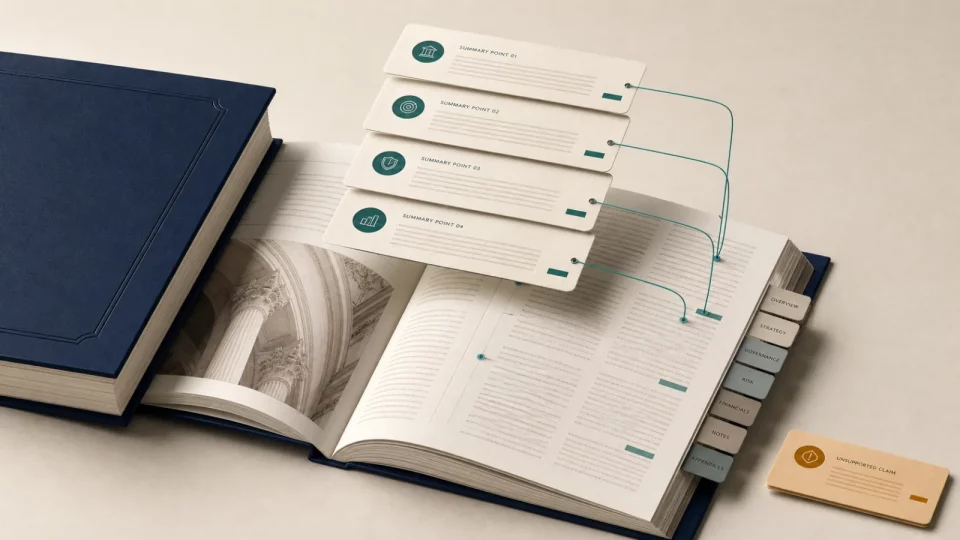
Can AI Summarize an Annual Report Accurately?
A claim-by-claim audit of a public Form 10-K summary shows why citations need section-level verification.
-

Can AI Spot a Financial Scam Message? A Controlled Test
Forty synthetic messages expose false negatives, false positives, and the danger of treating a classifier as a guarantee.
-

Building a Cash-Flow Forecast With AI Without Trusting the Numbers Blindly
A synthetic 12-month case separates formula accuracy from assumption risk and tests three scenarios.
-
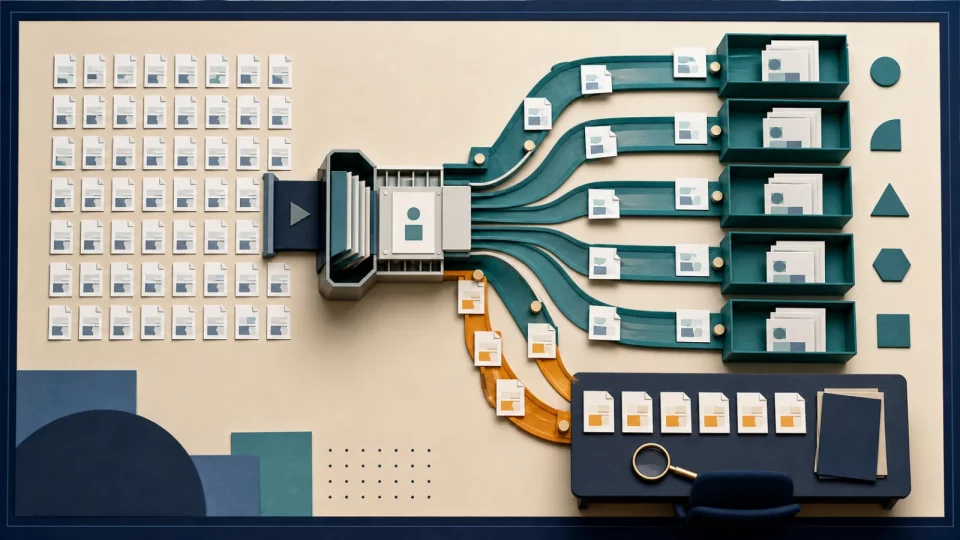
AI Invoice Categorization: A 50-Transaction Accuracy Test
A synthetic small-business dataset shows 88% exact-label accuracy and six errors that still require review.