The battle in Iran was arguably unhealthy sufficient for mortgage charges.
It despatched them from the very best ranges since mid-2022 proper again towards the excessive 6s once more.
To make issues worse, we’ve gotten a sequence of sizzling jobs reviews too, together with in the present day’s BLS report beat.
However that’s not all; a 3rd risk is convexity hedging, the place traders promote extra Treasuries to hedge the rise in bond yields.
Taken collectively, there at the moment are three forces placing upward stress on mortgage charges.
Mortgage Fee Risk #1: The Iran Battle
That is most likely the most important challenge in the mean time and the explanation we not have a sub-6% 30-year mounted mortgage price.
We had one as lately as March 1st, however then an sudden battle erupted and the Strait of Hormuz shut down.
Lengthy story brief, oil costs surged greater in consequence and inflation fears had been renewed, proper after we appeared to lastly beat it.
That pushed 10-year bond yields greater, a bellwether for 30-year mounted mortgage charges.
Within the course of, the 30-year mounted climbed from round 5.875% all the way in which to six.75%, earlier than easing considerably lately.
However there’s a good likelihood it might re-test these ranges and transfer even greater if circumstances don’t enhance quickly.
And final I checked, there doesn’t appear to be a lot of a decision occurring within the Center East.
Mortgage Fee Risk #2: A Scorching Labor Market
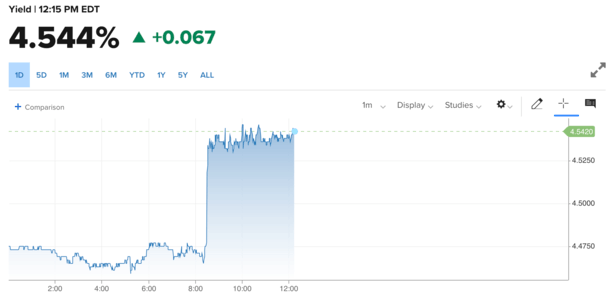
The subsequent challenge for mortgage charges is sizzling labor. We’ve seen a sequence of jobs beats currently, whether or not it was the ADP report on Wednesday or in the present day’s month-to-month jobs report for Might.
The BLS stated 172,000 jobs had been created final month, an enormous beat over the 80,000 anticipated by forecasters.
Merely put, the labor market has confirmed to be resilient, regardless of many anticipating weak jobs numbers to proceed.
We had a sequence of chilly jobs reviews late final 12 months, however it appears the labor market has firmed up since.
All else equal, this places upward stress on bonds yields and mortgage charges, as seen within the 10-year bond yield chart above.
Or not less than doesn’t assist mortgage charges drop as a consequence of any implied weak spot in that division.
If it continues, it fuels inflation considerations, particularly when mixed with excessive oil (and gasoline) costs.
Mortgage Fee Risk #3: Convexity Hedging
The third and closing challenge mortgage charges face in the mean time is a factor referred to as “convexity hedging.”
It’s a technique the place traders promote Treasuries when yields rise, which may amplify the transfer greater.
So bonds dump much more than they usually would, resulting in even greater bond yields.
As a result of bond yields and mortgage charges transfer in relative lockstep, it places extra upward stress on rates of interest.
Within the course of, the upper mortgage charges act as a deterrent to refinance, resulting in longer period on related mortgage-backed securities (MBS).
By promoting Treasuries, these traders can scale back their rate of interest danger and rebalance their portfolios.
However extra promoting of those bonds means yields go up greater than anticipated, leading to greater mortgage charges.
To summarize, we’ve now acquired three headwinds for mortgage charges, together with the battle (greater oil costs), sizzling labor (provides to inflation considerations), and exaggerated Treasury selloff as a consequence of greater bond yields.
All of those forces have the potential to push the 30-year mounted again to 7% or greater, however to this point mortgage charges have taken all of it in stride. It might be quite a bit worse.

Earlier than creating this web site, I labored as an account govt for a wholesale mortgage lender in Los Angeles. My hands-on expertise within the early 2000s impressed me to start writing about mortgages 19 years in the past to assist potential (and present) dwelling consumers higher navigate the house mortgage course of. Comply with me on X for decent takes.